Showing posts with label korean. Show all posts

Monday, March 21, 2011

Ginger Tea

I've been on a cooking break for 2 weeks now. Started with the kids getting stomach flu. I didn't get "really" sick, but some kind of half way hybrid kind of sick, loosing appetite, big fatigue etc. I'm not going to be graphic on this but let me tell you, when taking care of stomach flu patients you don't really feel like making anything you'll ever might want to eat again. We're all well now but my cooking hasn't taken off since that. But I hope that will change within the next few days!

One last Korean thing that is a great pick-me-up when not feeling so good, especially around the stomach area. Ginger Tea. Just smash up a piece of ginger, the older and drier, the more flavour in the end. Boil it for 10 minutes. Add some honey and done.

Tuesday, March 1, 2011

Cooking on the edge - kimchi with shrimps

I'm not sure if this is a good idea or not but I just started another batch of kimchi, this time I added 50 grams of dried shrimps. Feels like a crazy thing to do, after all, the kimchi is supposed to last for a month or two, and sefood is not something you should keep around that long. But, the recipe called for salted shrimps, and I've read as well that people sometimes throw in raw oysters into their kimchi so I thought, what the hell, I'm giving it a try. Hopefully I'll be able to smell if things are starting to go seriously wrong (does that sound like some last famous words or what).

Monday, February 28, 2011

Kimchi Potato Pancakes and Chilled Cucumber Soup


The recipe for kimchi potato pancakes from "Eating Korean" did not work out very well for me. The pancakes ended up crispy and good looking all right but there was just way to much salt in them. It might have worked if you weren't supposed to add lots of kimchi to the pancakes, but with both salt and kimchi  - no. 

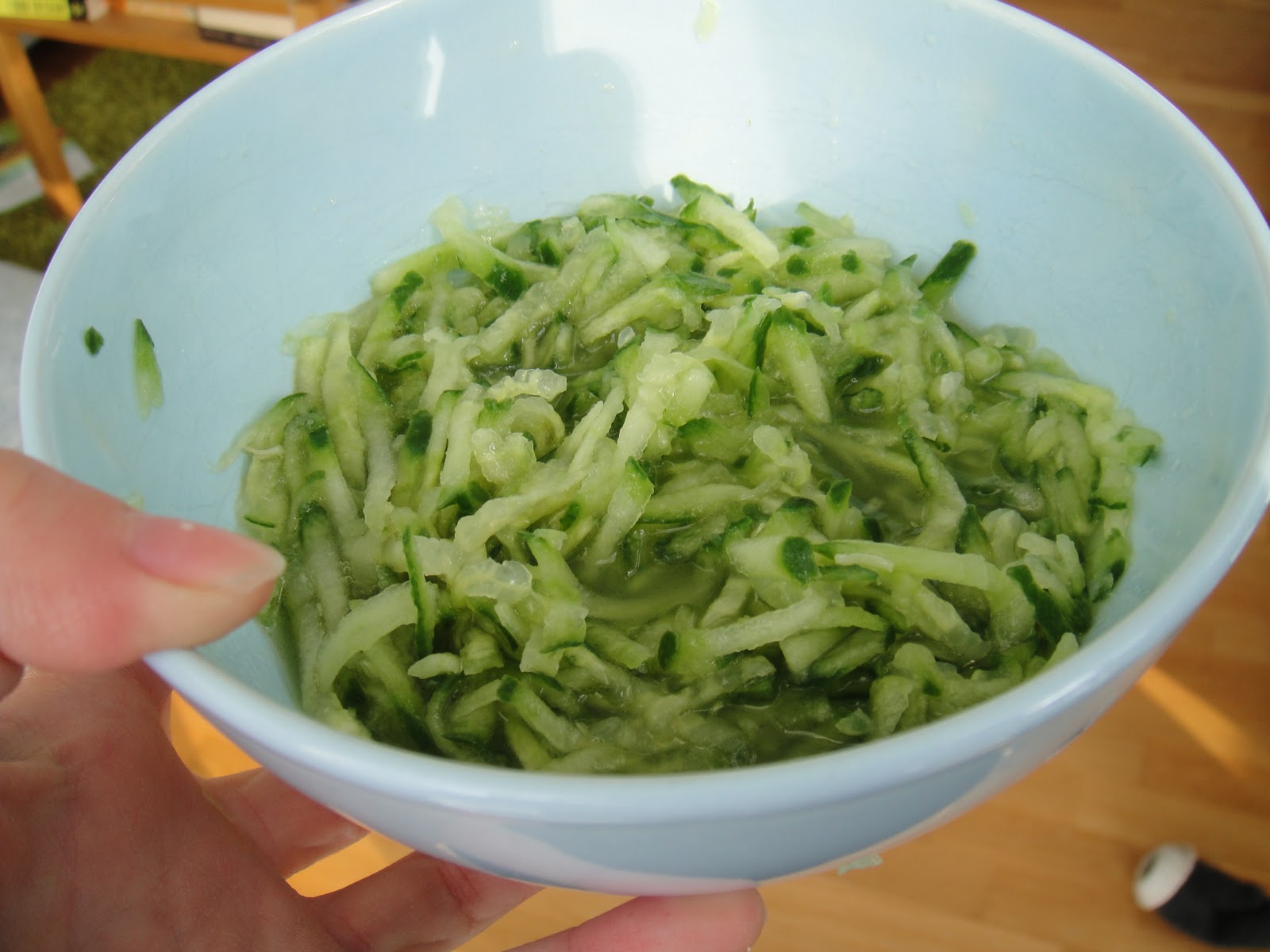
But, if the food is to salty, add something sour - an old Thai cooking trick. The next day, in order to give the pancake leftovers a last chance (not to mention I didn't have anything else to eat for lunch) I decided to make a tart veggie side dish to go with them. I settled on "Chilled Cucumber Soup" (Oi Naengook), consisting of shredded cucumbers in a vinegar marinade.  


If you ask me how come that dish is called cucumber soup I really can't answer. It's not very soupy to me. Maybe I was supposed to shred the cucumbers finer. Or use smaller cucumbers to the amount of liquid. Or maybe the definition of soup is broader in Korea than here, I don't know. But the cucumbers and the pancakes hit it off just great, so in the end I did get a decent meal.


Sunday, February 27, 2011

Thoughts on Korean Cuisine

The Flavour Bible (by Karen Page and Andrew Dornenburg) lists the following foodstuffs as typical for Korean cuisine:
  • chili
  • fish
  • garlic
  • noodles (esp. buckwheat)
  • rice
  • sesame seeds
  • shellfish
  • soy sauce
  • sugar
  • pickled vegetables (e.g. kimchi)

Compared to other cuisines in that book, this list has a short and rustic feel to it. The ingredients are cheap and easy to some by (even in Sweden). So far, I really like cooking and eating Korean food. The food makes sense somehow. Maybe it's because it's a cold weather cuisine and now we're having a very cold winter here in Sweden. The chilli warms one up and the multitude of flavours in the pickles makes the meals feel interesting and alive. Then, of course, a part of Korean cuisine is eating animals alive, as seen in one of my favourite movies ever "Oldboy" by Park Chan-Wook, but, don't worry, I'm not there yet.

Tuesday, February 22, 2011

Remixing: Bibimbap and Kimchi Fried Rice

Can't say I know many Korean dishes, but Bibimbap I've heard of. A bowl of rice topped with whatever good stuff you've got on hand.

My version had a fried egg, some bulgogi (meat marinated with soy sauce, garlic and sesame oil), garlic fried spinach, stir fried carrot and kimchi. The bowl itself was kinda small so the rice isn't visible, but it's down there, trust me.

Bibimbap

A hearty dish with a home cooked feel to it, containing a little bit of everything.

The next day I made another go at using up my kimchi. I decided on trying Kimchi Fried Rice. Funny thing was, when I read the recipe I realised it called for exactely the same ingredients as for the Bibimbap. Luckily I had some leftovers, so I just chopped up the meat and the kimchi and fried everything together, and voilá - a new dish.

Kimchi Fried Rice

Dak Jjim - Korean Chicken Stew


A great winter dish, easy to make, containing cheap ingredients that most people (ok, at least me) tend to have on hand.

Fry up some chicken (it was supposed to be smaller pieces, but I had an idea that the chicken breasts would be juicier if I cooked them whole and cut them up at serving time. I'm not sure if I was right about this.) Throw in chopped onions, ginger and garlic. Then some cubed carrots and potatoes. A few shiitakes. Add some water, soy sauce and sesame oil. Let boil until chicken and veggies are all done. Serve with rice. That's it.

Note how Asians tend to treat potatoes as any type of vegetable, not as a sacred source of starch that must hog the whole meal. In most cases I prefer the Asian way.

Sunday, February 20, 2011

Korean food

Apart from the beef, that I wrote about in my last post, there is some kim chi still sitting around in my fridge. I've been eating it ever since I made it, about a month ago, using it as some sort of multi-purpose spice. One thing I discovered is that it goes very well with hommous. Also, it tastes good with baked salmon or in stews. But now the fermentation has been going on for a while and it's VERY pungent, so I'm going to reach for its roots in order to finish off the last of it. And that means Korea.


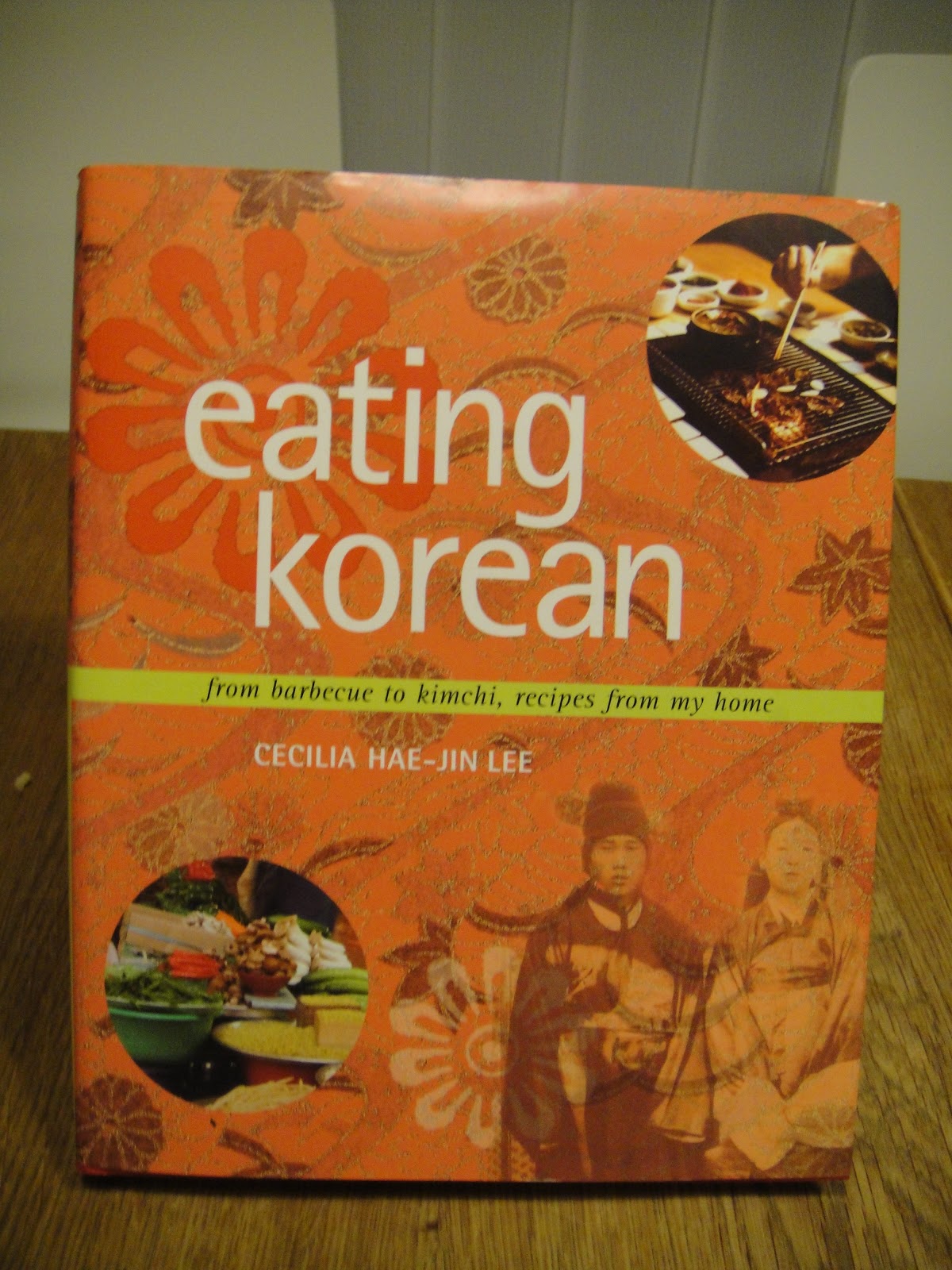
I own one Korean cookbook. It's "Eating Korean" by Cecilia Hae-Jin Lee. This might very well be the least foodporny cookbook ever. Everything is in black and white and the pics are so grainy, it's hard to see what they actually present. The recipes are mostly uncomplicated and down to earth (which to me means kind of boring). But I have tried a few of them and they have all worked out fine, so I'll be giving the book another chance now.

Monday, January 31, 2011

Home Made Kimchi

When I visited Japan 2 years ago I was impressed by their pickled veggies. When I got back home I realised that my life just would not be complete without a Japanese pickle press, so I got one at Amazon (http://amzn.to/hViyFN) and forgot all about it. Until now, that is, when I decided I needed a little kitchen challenge and decided to go make my own kimchi.

 Looking pretty

I went for the most common type of kimchi, based on Chinese cabbage, and here is the recipe I used.

Kimchi
1 head of Chinese cabbage
125 g salt
3 dl water
half a scallion (green end), shredded
1/2 dl chilli powder (I used a Thai, very hot, variety)
15 g sugar
20 g salt
3 cloves of garlic, minced
10 cm ginger root, minced
2 tablespoons of fish sauce

Boil the 125 g salt with the 3 dl:s of water until salt is solved. Chill.

Wash and trim the Chinese cabbage leaves of all brown spots.

Put the leaves in the press. Pour the salt water over them. Place the lid on top, pressing the leaves down (see picture). Leave it like that overnight.


The next day, rinse the cabbage leaves. Squeeze them to get as much moisture out of them as possible.

Mix grated garlic and ginger, shredded scallion, chilli powder, fish sauce, rest of salt and sugar in a bowl.

Gradually work the chilli mixture into the cabbage leaves, making sure it gets everywhere.

Put everything back into the press and put the lid on.

Leave it like this for 3-6 days (I left mine for 4).


When opening, the volume of the cabbages has shrunk to half its original volume.


Put kimchi in jars. It should be eaten within 3 to 6 weeks.

At first bite it tastes very salty. Almost too salty. But then the other aromas start to come through. There is sweetness from the cabbage, ginger, onion juice... In the end the chilli hits. It's VERY hot but the funny thing is, you don't feel that until the end, and the only way to quench that is to have another bite. I now understand how Korean people can be so addicted to this stuff. It's awsome!